If you’ve ever watched a customer stare at an estimate like it’s a pop quiz they didn’t study for, you’ve seen the real problem in the service lane: stress.
Not “I’m late for work” stress (though that’s real, too). I’m talking about that specific kind of anxiety that shows up when someone hears words like alignment, brake fluid, or timing belt… and their brain quietly whispers: “What if I make the wrong decision?”
When customers feel stressed, they don’t “decide.” They delay. They say, “Let me think about it,” which is basically customer code for: “I’m overwhelmed, and my wallet just flinched.”
The good news? You can reduce that stress – without discounts, pressure, or turning your advisors into amateur therapists.
And you don’t have to guess whether it works. We have data.
Stress turns a simple decision into a “no.”
Think of the customer’s mind like a web browser with too many tabs open:
- “Is this really necessary?”
- “Can I afford it?”
- “Am I being sold?”
- “What happens if I say no?”
- “What happens if I say yes and it wasn’t needed?”
That’s why lowering anxiety isn’t just “good customer service.” It’s a sales and retention strategy.
What vehicle owners told us – AutoNetTV’s research
In a nationwide research study where thousands of vehicle owners watched AutoNetTV Car Care videos and were asked how they’d feel if those videos were shown at a service center, the results were loud and clear:
- 92.2% said our videos would minimize their stress regarding vehicle services.
- 95.7% said our videos would increase their comfort with accepting service recommendations.
- 95.7% said our videos would increase their confidence in making automotive service decisions.
And it doesn’t stop there. When anxiety drops, trust rises:
- 93.1% said our videos would increase their trust in recommendations made by employees.
Why stress is so common in auto repair
Most vehicle owners don’t live in our world. They don’t know what “2mm brake pad life” means. They don’t know how alignment affects tire wear. They don’t know whether a fluid service is preventative or “optional.”
So, when they’re asked to approve something unfamiliar, they do what humans do: they assume the worst-case scenario.
Here’s the irony – customers often feel more stress saying “yes” than saying “no,” because “no” feels safer in the moment. “No” preserves money today. “Yes” requires trust, understanding, and confidence. That’s why stress kills approvals.
Picture a customer sitting in your lounge. They came in for an oil change. You recommended an alignment service as well. They hesitated. You walk away to help another customer – and you can almost feel what’s happening. Their phone comes out, Google opens, and they type, “Do I need an alignment?”
Five minutes later they’re reading a forum post from 2014 written by someone named “TruckGuyKen” who says alignments are a scam invented by … probably Big Tire companies.
Now the stress is worse than before because the customer has more information, but not more clarity.
This is where the right kind of education changes everything. Instead of letting random internet noise raise anxiety, you give the customer a simple explanation that builds confidence.
The real antidote to stress: clarity
Our research showed something even more foundational than reduced stress:
- 97% said our videos increased their understanding of the service.
“Show me” beats “trust me”
One of the most powerful findings in our research report is this:
- 94.5% agreed it would be helpful if a service advisor showed them a brief video to explain what’s wrong and/or the recommended service.
Think of service recommendations like a doctor’s visit. If a doctor says, “You need medication,” and you don’t know why, you’ll feel anxious. You’ll hesitate. You might even go home and read the side effects online until you’re convinced the pill will ruin your life. You also might post a negative online review of that doctor. But if the doctor shows you the test results or an illustration and explains, “Here’s what we’re seeing, here’s what it means, and here’s what this prevents,” the anxiety drops. You feel informed. You feel safe saying yes.
Automotive service is the same. Customers don’t need pressure. They need a diagnosis they can understand. When stress drops, it doesn’t just help you close today’s work, it helps you build a longer relationship. So, the stress problem isn’t just a sales problem. It’s a retention problem. If customers leave feeling anxious, confused, or uncertain, they don’t just decline services, they may quietly decide to try another service center next time.
So, how can you lower customer stress right now? Here are 3 easy ways:
1) Lead with “what it is” and “why it matters,” not the price. A price without context creates anxiety. Context reduces it.
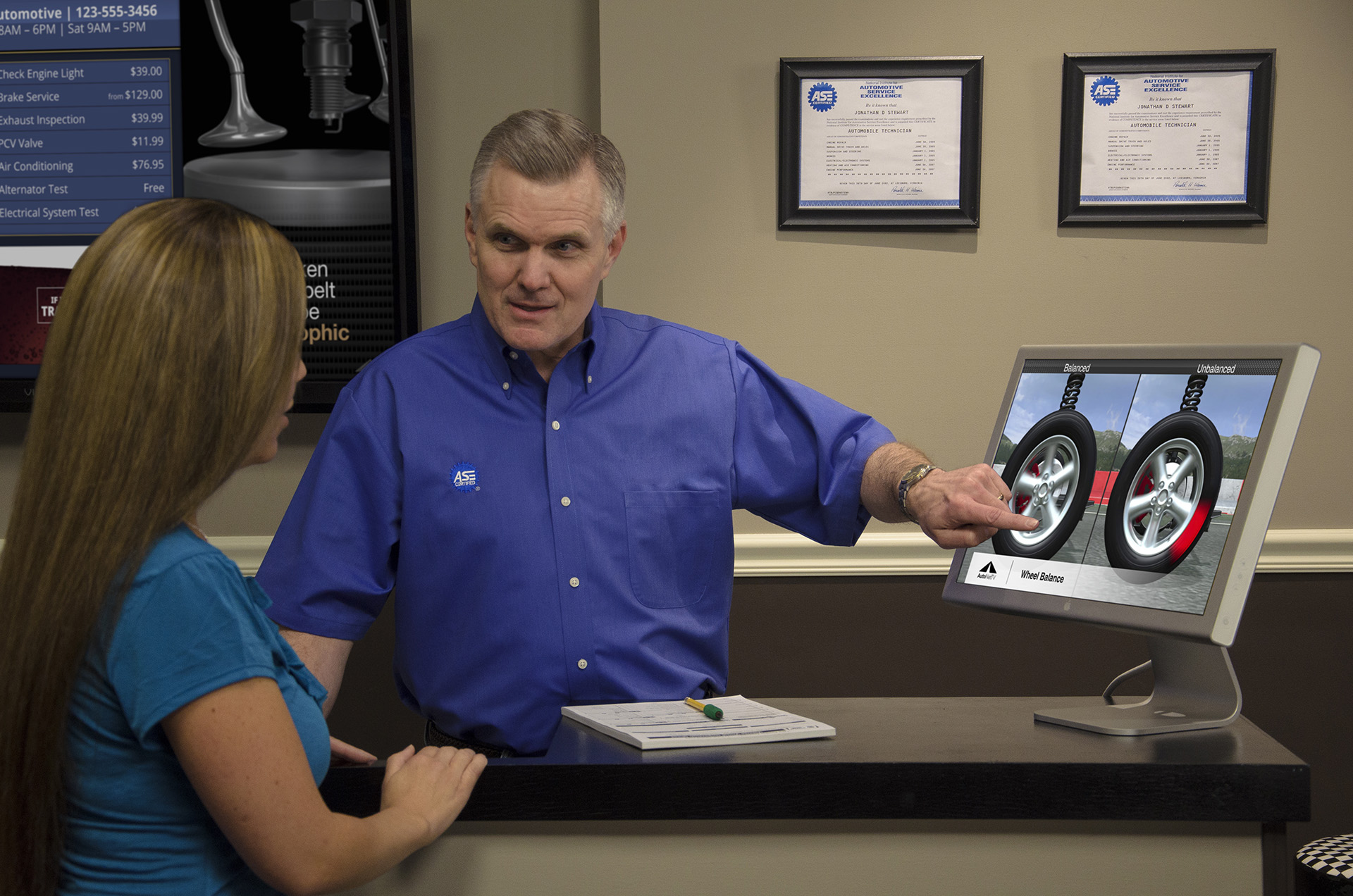
2) Use visual explanations (especially for common, high-decline services) actively as your aid. Our research report data shows customers overwhelmingly respond to brief videos as a helpful explanation tool (94.5%). Consider using some of our interactive tools, each designed for a different customer touchpoint:
- Service Counter – our Car Care TV program includes Content On Demand, allowing you to interrupt the program with the included remote control to show service videos right then and there.
- Digital Inspections – our Car Care Plugin enables videos to be included in any Digital Vehicle Inspection (DVI) application, allowing you or the customer to click and watch a video tied to a needed or recommended service.
Stress kills approvals because stress kills confidence. But when you replace uncertainty with clarity – when you show customers what’s happening and why it matters – you create calm, confident decision-makers. In other words: less anxiety, more “yes.”
If your service center can become the place where customers feel informed instead of intimidated, you won’t just sell more maintenance – you’ll earn more trust. And trust is the best long-term sales tool you’ll ever install.
Visual Aids for Service Advisors