We’ve all been there: sitting in the exam room, listening to the doctor explain some medical term, and nodding along politely while our brain is screaming, “I have no idea what they just said.”
This is exactly how many of your automotive service customers feel. They hear words like “fuel induction service” or “differential fluid exchange,” and their eyes glaze over. Confusion takes over – and confusion is the enemy of conversion. Because when people don’t understand, they don’t buy.
Why Confusion is Costly
A customer’s gut instinct when they’re unsure is simple: say “no” or “not now.” It’s a form of self-protection. According to Harvard Business Review, customers who feel overwhelmed or confused are 30% less likely to make a purchase decision.
In auto service, that hesitation is magnified. Customers already suspect upselling, and if the message isn’t clear, they assume the worst: “This is just a money grab.” Suddenly, a $200 service that could prevent a $1,200 repair looks like unnecessary fluff.
And here’s the catch: most of the time, it’s not the service that’s the problem – it’s the messaging.
The Jargon Jungle
Imagine telling a customer: “Your PCV valve is clogged, leading to crankcase pressure buildup and potential gasket failure.”
Now imagine instead: “This little valve is like a release vent. When it’s clogged, pressure builds up, and your engine starts leaking oil. Replacing it now prevents an expensive mess later.”
Which version do you think leads to a yes?
Customers don’t live in the world of acronyms and torque specs. They live in a world of metaphors, stories, and everyday comparisons. The clearer you make the message, the easier it is for them to say yes.
A service advisor once discussed a customer refused a timing belt replacement. “They were convinced it was some made-up service,” he said. “So, I switched gears. I told them, ‘Think of this belt like the chain on your bicycle. It keeps everything moving in sync. If it snaps, the whole thing crashes.’”
The customer paused, thought about it, and replied, “Oh – that makes sense.” Then they approved the job. The belt didn’t change. The explanation did. That’s the difference between confusion and conversion.
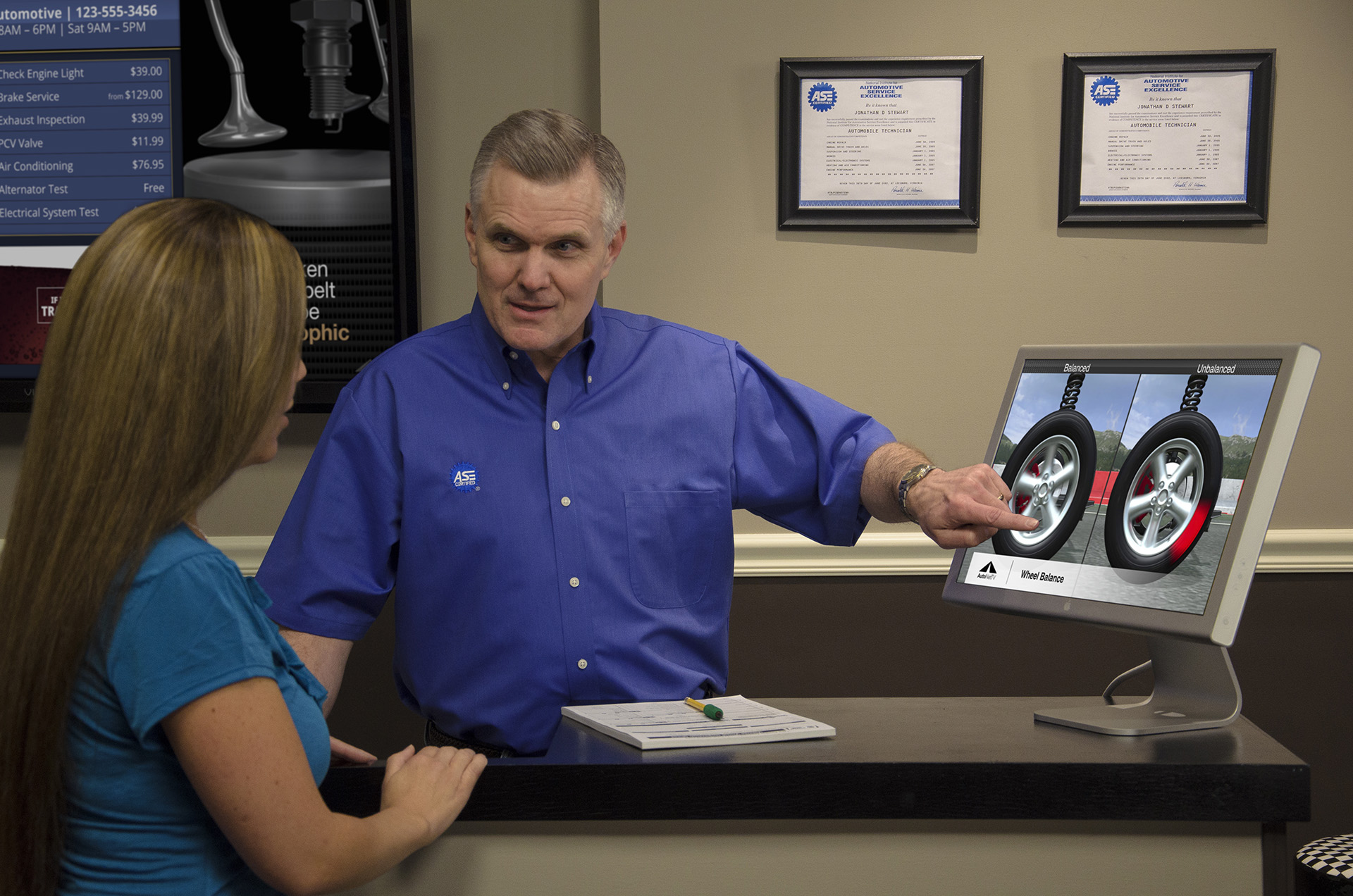
If you’ve paid attention to AutoNetTV’s Car Care videos, you’ll notice similar analogies, comparisons, and everyday examples to help your customers understand and remember not only the “what” and “how” of the service, but also the “why”, or benefits, of having services performed. We have a differential service video that uses bicycle gears to help customers understand how the system works. We hope your team members will freely use the stories and comparisons we use in our videos as part of their discussions. And, if you want more ways to show or share those videos with your customers, take a look at our new Discover Mode Video Player for your website.
Clear messaging matters because otherwise, it feels like one of those old Kung-fu movies with bad language dubs that clearly don’t match what their mouths are saying. The advisor is talking, the customer is hearing something totally different, and the subtitles might as well say: Service Advisor: “Your brakes no worky.” Unless the story is translated into customer language, the plot gets lost.
Research That Backs It Up
Communication isn’t just nice to have – it’s proven to drive action. A J.D. Power study on automotive service found that communication and transparency are among the top drivers of customer satisfaction. When customers understand the service, they trust the recommendation and are far more likely to approve it.
Another study in consumer psychology shows that when people are given clear, simple explanations, their confidence in a purchase decision rises by more than 20%. That’s not a small bump – that’s the difference between “let me think about it” and “go ahead and do it.”
AutoNetTV’s own study, Automotive Service Report, a nationwide survey of vehicle owners, showed that when vehicle owners were shown AutoNetTV Car Care videos, 95.7% said their comfort with accepting the service recommendations increased because they watched our videos.
Turning Confusion into Conversion
So, how do you move customers from head-shaking confusion to confident conversion? It’s about changing the way you communicate:
- Use analogies customers can relate to. Oil = bloodstream. Brake pads = soles on shoes.
- Provide visuals. A video &/or before-and-after photos of dirty vs. clean components turns abstract into concrete.
- Focus on benefits, not features. Customers care less about “polymer additives” and more about “improved fuel economy.”
At the end of the day, customers don’t reject services because they don’t matter. They reject them because they don’t understand them. Confusion is the barrier. Clear messaging knocks it down.
Every time you translate the technical into the relatable, you move a customer from doubt to decision. From hesitation to approval. From confusion to conversion. And that’s how you don’t just sell maintenance – you sell peace of mind.
Visual Aids for Your Service Advisor